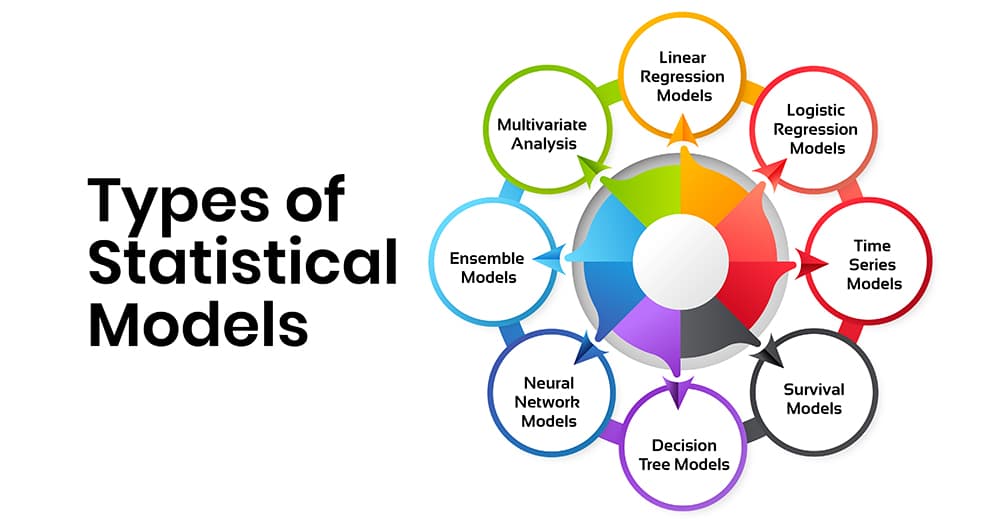
Mathematical frameworks that describe relationships in data and quantify uncertainty—core to inference, forecasting, and experimentation.

Algorithms trained on data to make predictions or decisions; typically optimized for accuracy and generalization.

ML models built from layered neural networks; especially strong for unstructured data like images, audio, and text.
Transformer-based deep learning models trained on massive text corpora to generate and analyze language.
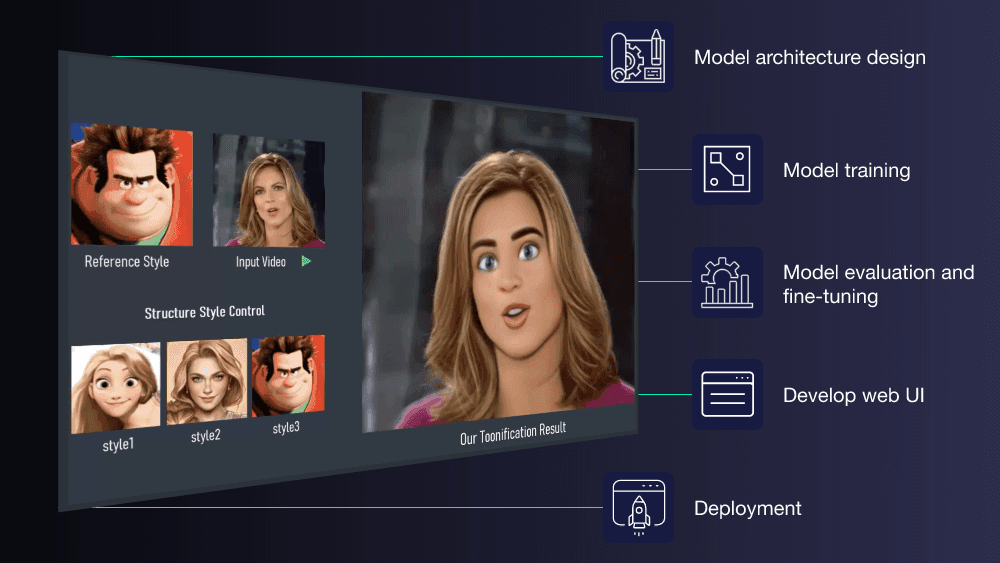
Models that learn data distributions to create new samples—useful for creative work, simulation, and data augmentation.

Representations of real-world physical systems—often grounded in laws of physics—to predict behavior under different conditions.

Executable models that simulate systems over time, sometimes connected to real sensor data for monitoring and optimization.

Models that explain or forecast economic behavior, pricing, and risk—central to policy, markets, and corporate planning.

High-level explanations or frameworks that help people reason about complex systems without necessarily being mathematically formal.

Digital representations of objects or environments used in engineering design, manufacturing, games, and film.