Lighting is one of the fastest ways to make a home feel more expensive and comfortable. A layered plan improves function (reading, cooking) while creating mood and depth at night.

A clear focal point makes a space feel intentional and “designed.” It guides furniture placement and reduces visual clutter because everything has a purpose.

Paint is one of the most cost-effective transformations. Beyond wall color, painting trim, doors, or a ceiling can add character without new furniture.

Texture is what makes neutral rooms feel rich and inviting. Textiles also help with acoustics and can visually soften hard surfaces.

Plants add life, color, and organic shape—instantly improving warmth and perceived airiness. Even one large plant can change a room’s presence.

Artwork sets tone and color direction. A gallery wall can turn blank space into a signature design feature when spacing and frames are consistent.
%3Astrip_icc()%2Fall-white-living-room-black-spideresque-fixture-761c55687796-79824ea8c16c450fa91c36c90df5bbb1.jpg&w=3840&q=75)
Swapping knobs, pulls, faucets, and light fixtures modernizes a home quickly—especially kitchens and bathrooms—without major renovation.

Intentional styling reduces clutter while keeping personality. Grouping items and using trays creates structure, making everyday objects look curated.
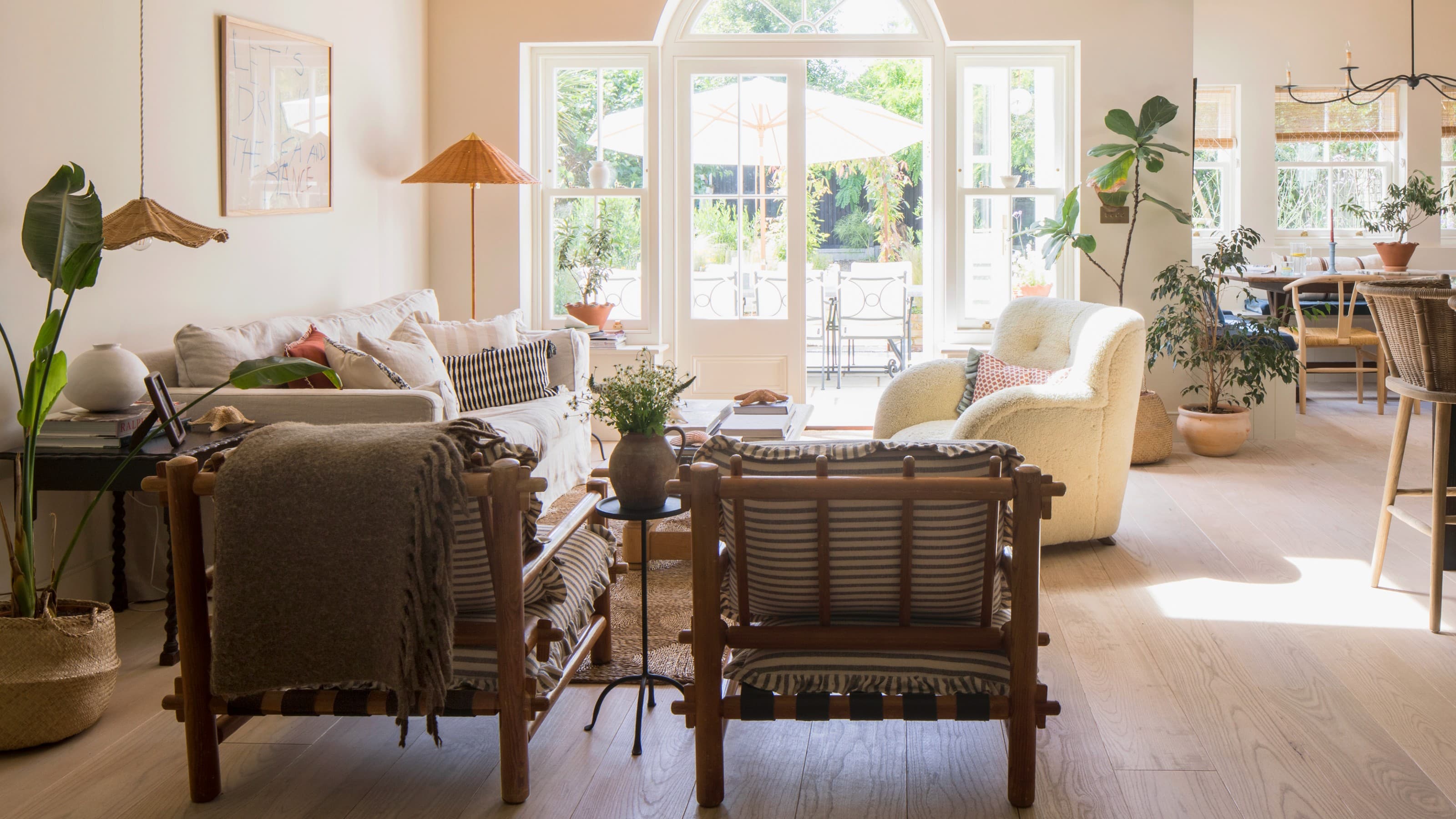
Open layouts feel calmer and more functional when clearly zoned. Zoning helps traffic flow and makes each area look intentional rather than “floating.”

A stylish storage plan keeps rooms tidy—one of the most important “decor” outcomes. Decorative storage helps maintain the look long-term.