A foundational UX classic that explains why products are confusing and how to design with human behavior in mind. It’s one of the best books for building strong design intuition and vocabulary (affordances, signifiers, feedback, constraints).

A highly practical guide to web and product usability with clear, memorable heuristics. Ideal for quickly improving navigation, content hierarchy, and clarity, plus lightweight usability testing.

A comprehensive interaction design reference known for goal-directed design, personas, and robust design process thinking. Useful for designers working on complex products and flows.

A modern, product-team-oriented UX book focused on outcomes, collaboration, and fast learning cycles. Particularly relevant in Agile environments where design, research, and engineering iterate together.
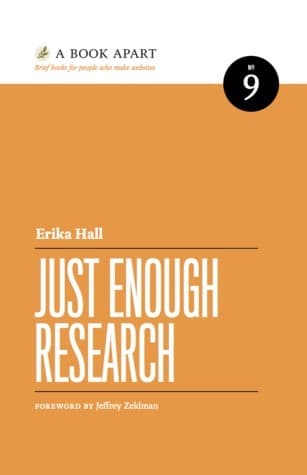
A concise, approachable guide to doing effective user research without overcomplicating it. Excellent for teams that need to start research quickly and ethically, with rigor.

A compact framework for understanding UX from strategy to surface, often taught as an intro model. Helps teams align on what UX includes and how layers connect (scope, structure, skeleton, surface).

A practical, research-informed collection of psychology insights for design decisions. Great for adding behavioral rationale to UX choices (attention, memory, motivation, persuasion).

Not a UX book per se, but one of the most influential references for understanding human judgment and decision-making. Helps designers anticipate biases, heuristics, and errors users make under uncertainty.

Excellent for solo UX designers or small teams who must prioritize and deliver impact with limited resources. Offers templates and tactics across research, design, and stakeholder management.

A go-to reference for quantifying UX with usability metrics and benchmarking. Ideal for teams that need to combine qualitative insights with measurable outcomes and track improvements over time.